
Lights
Ubu Gallery, London, U.K.
2013
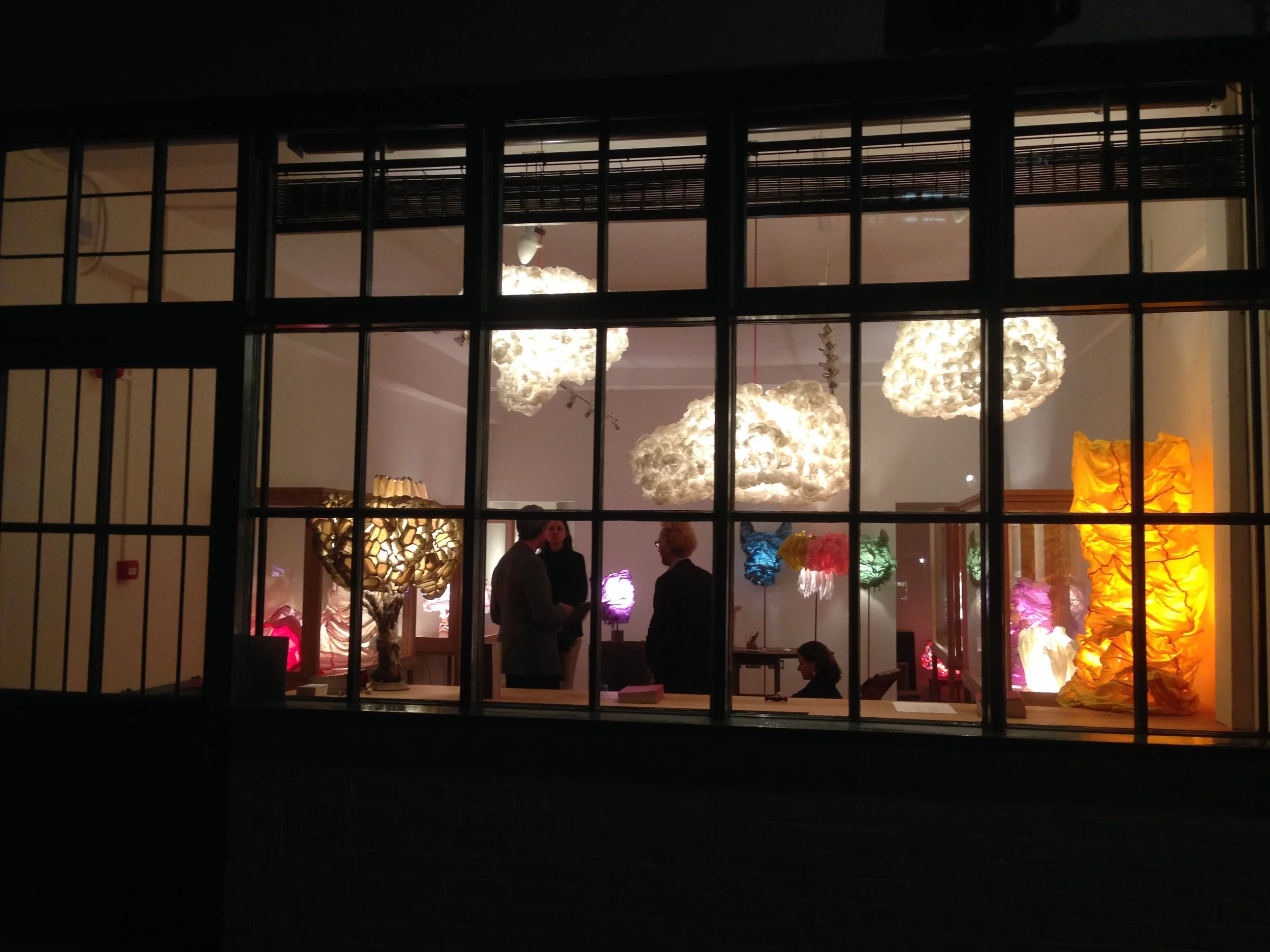
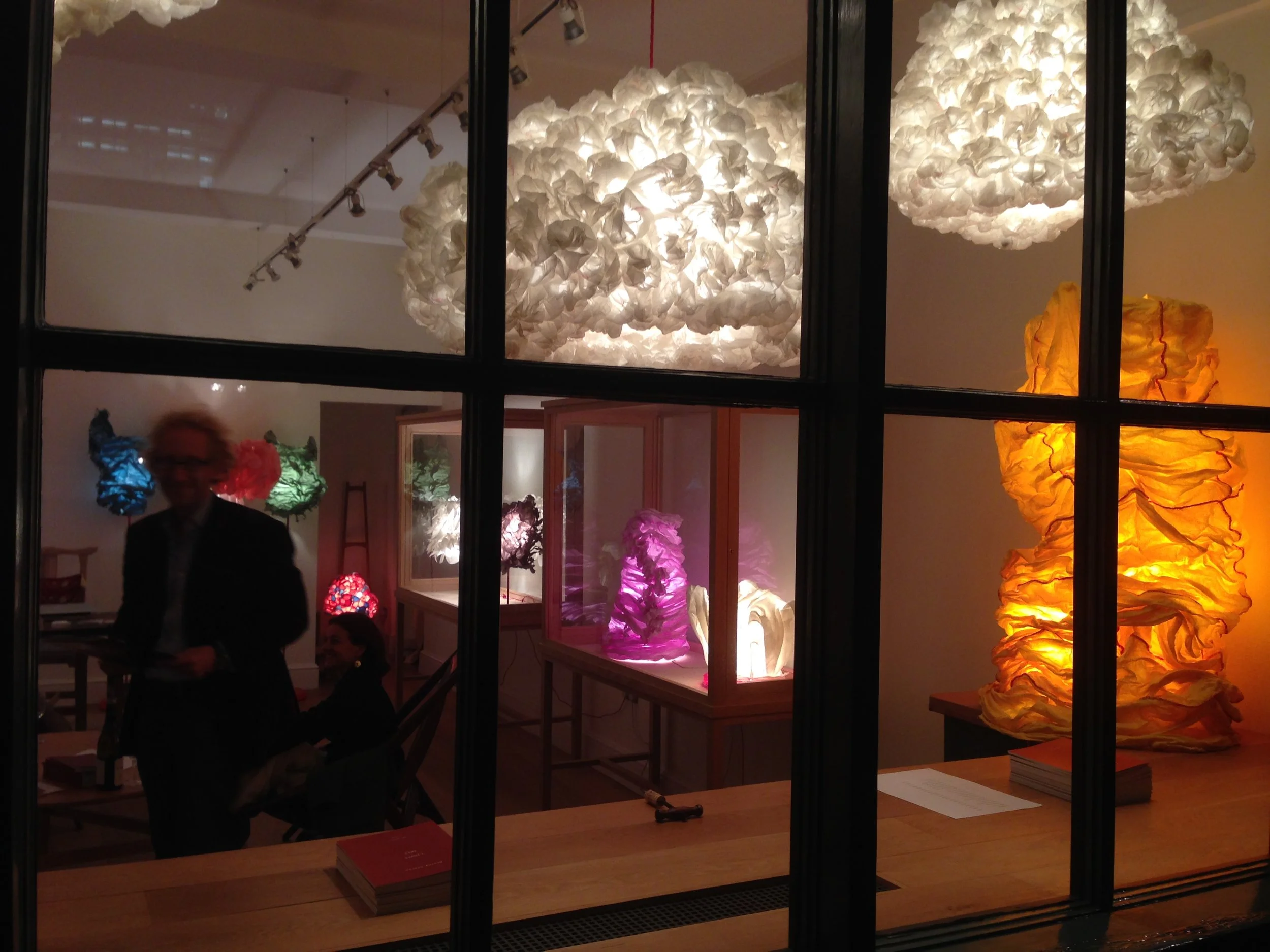
Orsina Sforza’s new collection will be on show at the UBU Gallery in London, from 11th to 30th October 2013.
Born in Milan, Orsina Sforza is originally a painter. She lives and works in Rome. Over the last two decades, she has been creating luminous sculptures.
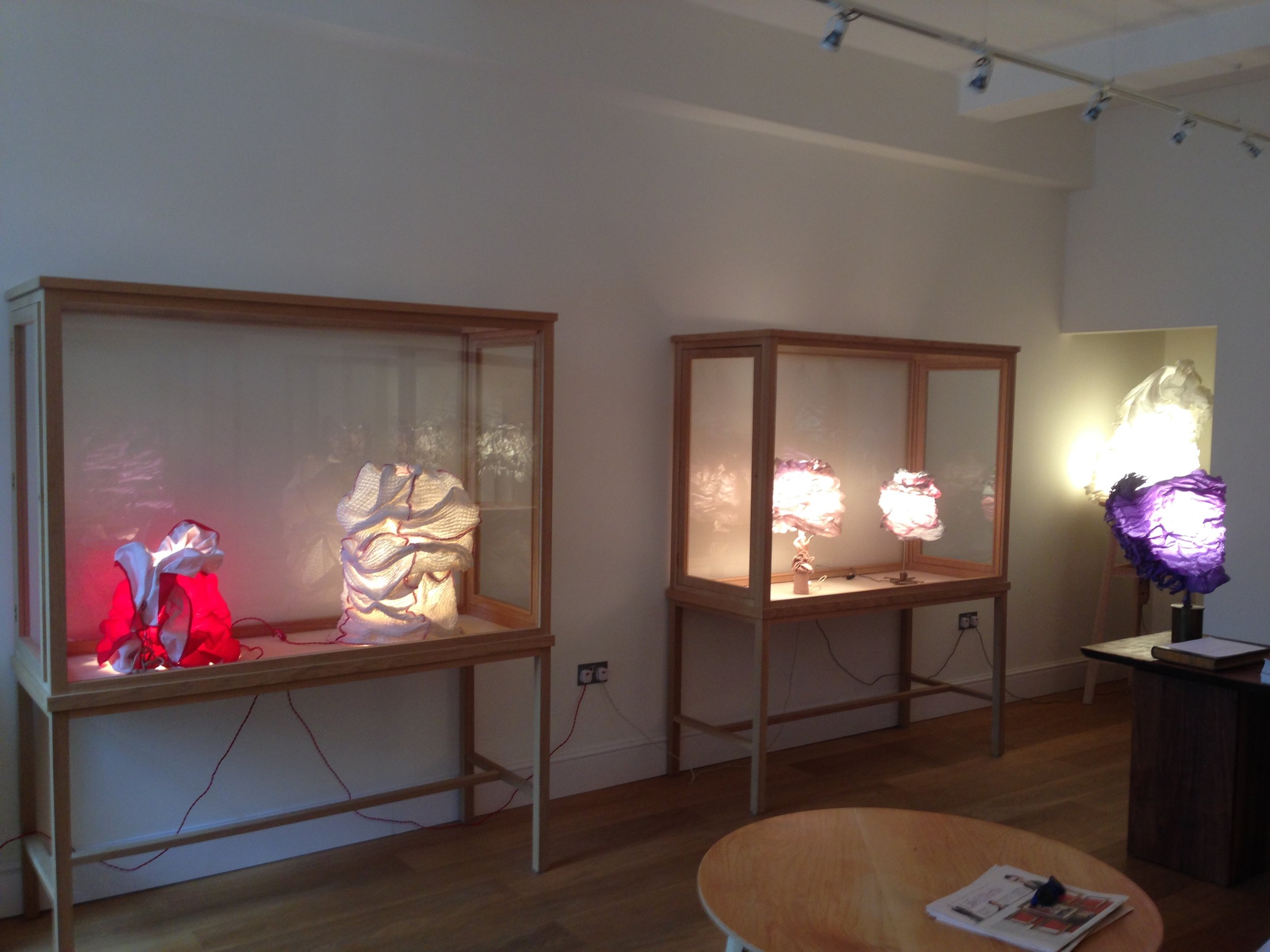
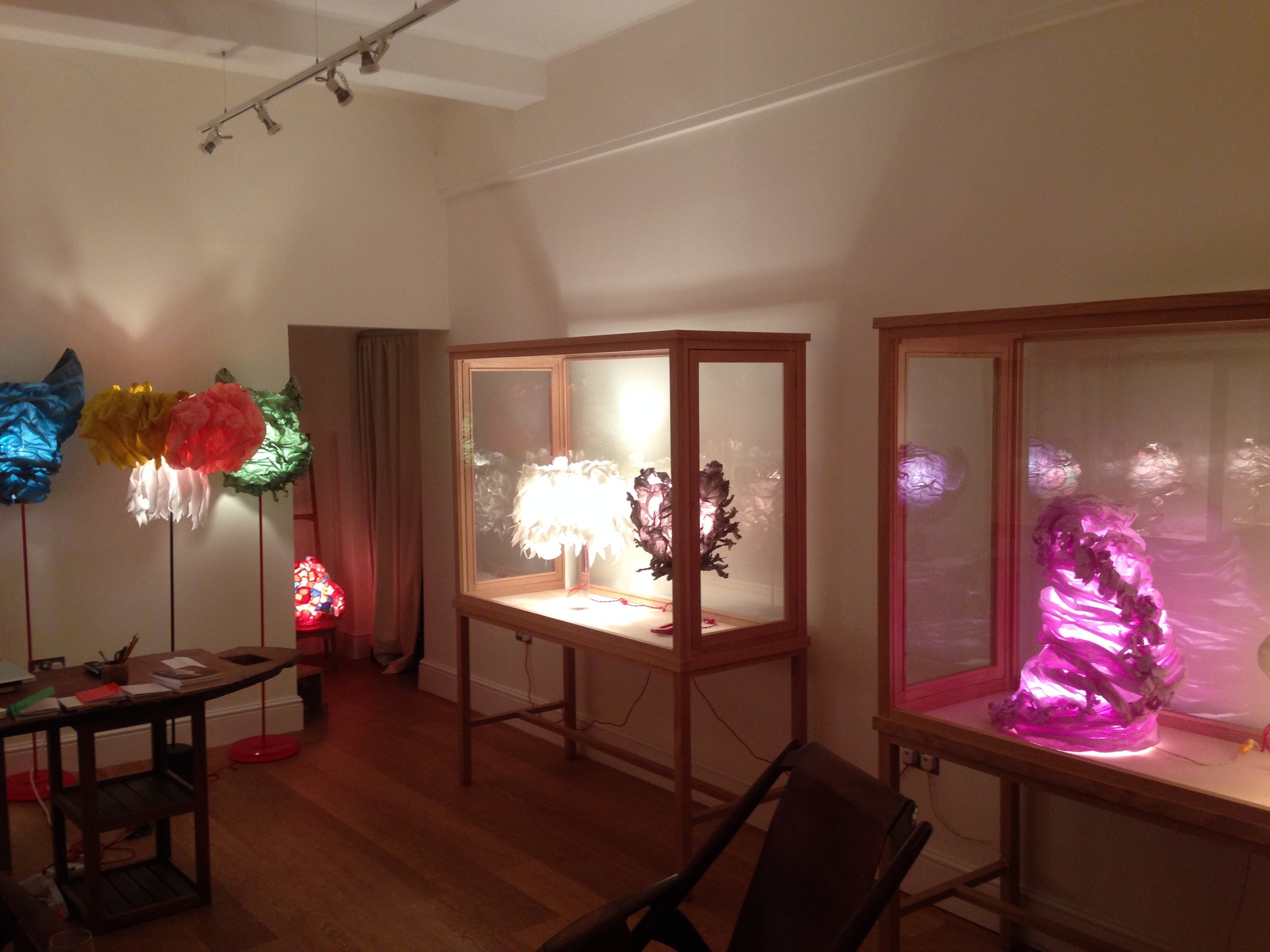
All are unique, hand-crafted pieces, using only the simplest materials - paper, hand-sewn fabric, common household artefacts (rubber gloves, doilies, cleaning cloths, stitched oil paper).
The 2013 collection shows her latest work. Each light has its own title and gender, shining a gentle light through colourful folds and draperies.
The festive Marie Antoinette series moves in sumptuous, unpredictable shapes echoing primitive sea creatures or giant meringues. Candid Nijinsky's immaculate petals glitter like a cold fire and The Bernini series simply coruscates.
Orsina Sforza’s lights have sold all over the world and at auction.

The Joy of Instant Beauty
by Patrizia Cavalli
This exhibit troubles me; it tears me in two. However happy I may be that the stupendous lights created by Orsina Sforza will be displayed for the public’s admiration, I am instantly struck by angst and envy at the thought that these same lights, if sold, will end up who-‐ knows-‐where, perhaps in strangers’ homes, while I want them to be mine, all mine. And yet I already have 28 of them. When I leave them on (which I often do, even by day, because in comparison with natural light they have a quiet vibrancy that lays bare the soul) and in my to-‐ing and fro-‐ing from one room to the next I see the Scozie lamp that warms otherwise-‐ neglected corners with a red glow, and the rippling Marie Antoinette that imperiously watches over my studio door, or else the twinkling Nijinsky that aristocratically stands apart from the frenetic Tutù and from the sober Scribacchine while the great Ovipara broods over the marble relics nesting on my desk and the Bernini twists in pale ecstasy towards the Venosa; and then, one after another, the Malevich, the Firebird, the Pollock, the Africana and those many nameless Uniche that shine on, and finally the sparkling Callas that, placed beside an armchair, almost compels me to sit down and read — I think that my house is truly beautiful. They animate it and soften it, and there is no room I ever want to leave, no corner that doesn’t draw me in. In the matter of lighting, then, I would have to consider myself more than equipped. But this is precisely my worry: as thoroughly illuminated as I am, here is Orsina Sforza continuing to create new lights, always more astonishing than the last, that excite my greed. But even if I could have them all, I wouldn’t know where to put them or, more importantly, how to use them. I have great respect for objects and, for me, to own something that is meant to be used without using it is unjust, it wrongs the object. Regarding lights, it is only right and proper that they give light when and where it is needed. If I don’t need their light, what other use could I invent for them? I cannot shamelessly substitute them for the ones I already have, thus upsetting my sweet landscape and ungratefully demeaning my older lamps’ heroic resistance, through the years, to clumsy accidents and dust. And neither can I reduce them to mere collectibles. Oh no, never! True, even unlit they are gorgeous — indeed, at rest they better reveal the sculptural sumptuousness of the humble materials they are fashioned from; but it is when these same materials become suffused with light shining from within that they achieve true splendor: when the glues and the thickenings of overlapping papers are transformed into surprising shapes and depths and colors, previously secret, it is then that they unfold and cast joy upon all the things around them, which immediately glow with gratitude. It is clear: these lights want attention, day after day; they want a place to turn on and then turn off, on and off, and so on, forever. A place that I don’t have. No choice, then, but to surrender completely to my envy, directed above all toward those fortunate few who still have some corner as yet unlit, and thus will find themselves — simply by bringing these lights into their homes — in the joy of instant beauty. But also toward the less fortunate multitudes who, when they’re not crawling like worms beneath a wan uniform light that mocks the rich diversity of creation, exist half dead among gloomy lampshades that reveal unforgiving raw bulbs: these people will actually have the opportunity to resurrect entire rooms, thanks to the miracle of these true lights. Whoever they are, to them I dedicate all my envy. Unless I decide to move.